E-commerce Platform Development for Kenyan Businesses
Multi-vendor marketplaces or single-store shops built on Laravel — with M-Pesa, card payments, inventory, and order management built for the Kenyan buying experience.
Off-the-shelf e-commerce platforms are generic. They are built for a global average and they compromise on the things that matter for Kenyan businesses: M-Pesa is an afterthought rather than a first-class payment method, multi-vendor marketplace logic requires expensive plugins, and the performance on Kenyan mobile connections is poor. I build custom e-commerce platforms on Laravel that are designed around your specific product type, your customers, and the Kenyan market.
Single-Store vs Multi-Vendor
A single-store e-commerce site is the right choice when you are selling your own products or services and need control over the buying experience. A multi-vendor marketplace — where multiple sellers list on your platform and you earn a commission — requires more complex logic: seller onboarding and verification, per-seller inventory, seller-specific disbursements via M-Pesa B2C, dispute resolution, and performance dashboards for each seller.
I have built both. The architecture decisions depend on your business model, your vendor onboarding process, and how you plan to handle seller disbursements and returns. We work through these before writing any code.
M-Pesa as a First-Class Payment Method
In Kenya, M-Pesa is not an alternative payment method — it is the primary one for most purchases. I implement STK Push so buyers can pay without copying account numbers, support C2B Paybill for buyers who prefer the standard M-Pesa menu, and handle the reconciliation and callback infrastructure that makes M-Pesa reliable at scale. Card payments via Stripe or Paystack are available for buyers with Visa or Mastercard.
Product Catalogue and Inventory
Product management with categories, tags, variants (size, colour, weight), and multiple images. Inventory tracked per SKU with low-stock alerts and optional reorder point notifications to suppliers. Bulk product import via CSV for sellers migrating from spreadsheets. For marketplaces, each seller manages their own catalogue within the shared platform.
Order Management and Fulfilment
Order management covers the full lifecycle from placement through picking, packing, dispatch, and delivery confirmation. Orders are assigned to fulfilment queues. Status updates are communicated to buyers by SMS and email. For businesses with physical delivery, I integrate delivery tracking so buyers can see where their order is without calling your customer service team.
Search, Filtering, and Buyer Experience
Buyers should find what they are looking for quickly. I implement product search with relevance ranking, category and attribute filtering, price range filters, and sort options. On mobile — where most Kenyan e-commerce traffic comes from — the filtering interface is optimised for one-thumb navigation rather than being a desktop layout shrunken to a small screen.
Seller Disbursements and Commissions
For marketplaces, the platform retains a commission and disburses the balance to sellers. I implement M-Pesa B2C disbursements on a configurable schedule — weekly, biweekly, or on demand — with seller dashboards showing earnings, commissions deducted, and disbursement history.
Analytics and Growth
Revenue dashboards for merchants, conversion funnel analytics, product performance reports, and cohort analysis for repeat purchase behaviour. These are built from the data your platform generates, not third-party trackers that slow your pages.
How I Deliver This
Business model mapping
We establish whether you need single-store or marketplace architecture, your payment flows, and seller/buyer journey before design.
Catalogue and checkout design
Product structure, variant model, and checkout flow wireframed against your specific product type and buyer behaviour.
Core build: catalogue, cart, checkout
Core purchase flow built and tested first — this is the revenue-critical path that gets the most attention.
Payments integration
M-Pesa STK Push, C2B Paybill, and card payments integrated with full reconciliation and callback handling.
Seller tools and admin
Seller onboarding, inventory management, order management, and disbursements built and tested.
Launch and growth support
Load testing, SEO configuration, analytics setup, and ongoing feature development as you grow.
Frequently Asked Questions
What I Can Build
- Custom single-store and multi-vendor marketplace builds
- M-Pesa STK Push and Paybill payment collection
- Card payments via Stripe or Paystack
- Product catalogue with variants and bulk import
- Inventory management and low-stock alerts
- Order management and fulfilment workflow
- SMS and email order status notifications
- Seller onboarding, dashboards, and M-Pesa disbursements
- Mobile-optimised buyer experience
- Revenue and conversion analytics dashboard
Tech Stack
Ready to start?
Tell me about your project and I'll outline a realistic scope and approach.
Get a QuoteRelated Work

Farmbid Africa Marketplace
Agricultural marketplace platform connecting farmers with buyers. Features include product listings, bidding system, and...
 Completed
Vibo Africa Platform
Multi-vendor e-commerce platform with advanced filtering, cart management, and payment processing.
Completed: Sep 2024
 Completed
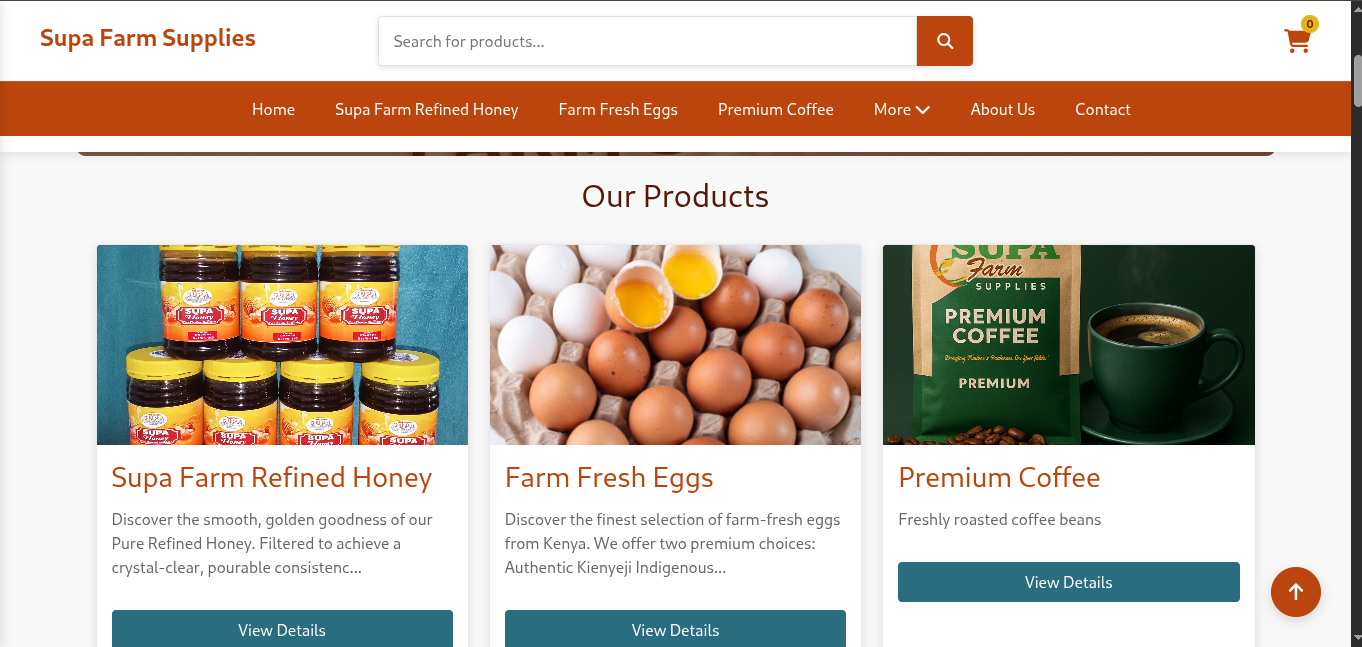
Supafarm Supplies E-commerce
Agricultural supplies e-commerce platform with inventory management, order tracking, and customer portal.
Completed: Dec 2024